
What is alip Arata, and what can you do about it? Let’s talk about it. So, alera is a inflammatory, stress-induced, sometimes trauma-based hair loss, where essentially your body is disrupting the growth cycle of the individual hair follicles in the predisposed area. So, you can really have Arata happen essentially anywhere from the neck up, and that is just where this type of inflammatory hair loss manifest itself.
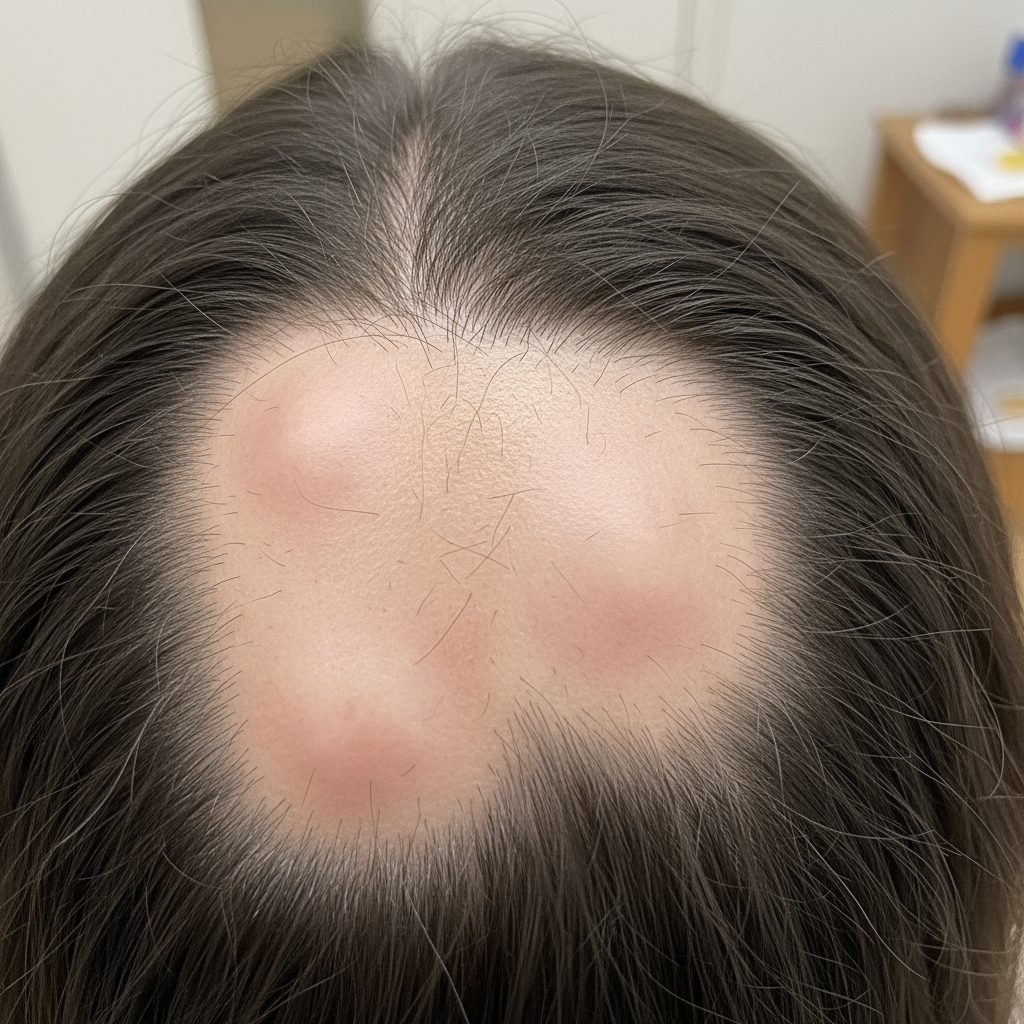
Now, Arata typically will happen in small circles, and then actually expand. You can actually get a circle over here and a circle over there, and then they begin to merge, or they move. It is sort of this fluid, ongoing type of inflammatory hair loss. Some people have itching. Some people have this, you know, very smooth appearance to the scalp. Some people have this very fine, sort of broken hairs in the area, but it’s all part of alip Arata.
What is Alopecia Areata
Now, it can also expand and turn into a much greater form of hair loss. So, it can start off as this little circle, and then essentially turn into what is called alipo Talis, which could be full scalp and face loss of hair. Uh, basically anywhere from the neck up, you can lose eyelashes, eyebrows, uh, even, you know, ear hair. And when you then obviously take that a step further, then there’s something called alipa universalis, and universalis is actually a full body loss of hair.
So, a lot of times people refer to this type of alopecia as alopecia, but it’s actually, obviously, has very specific names, because alopecia is just the specific medical term for hair loss. When you look at all of the different reasons and the different predispositions that might sort of allow you to be dealing with alip Arata, uh, a lot of times there’s a genetic history that for you manifests itself as alip Arata, or you might actually have alpata in your family.
Additionally, you have some nutritional problems that can lead to predisposition to aliper. So, typically, low farodin and low vitamin D3 can actually aggravate a underlying predisposition to alip cherot. And sometimes, actually, there are different exposures, like chemical exposure, that may lead to a general, you know, plausibility of an inflammatory scalp condition or an inflammatory hair loss. And I’ve seen actually all of those that I just mentioned in clinical practice, manifesting themselves in different ways, producing a more aggravated or producing alip sharata itself.
So, I’m going to go into talking about this a little bit more in detail — what you can do about it, and personally, things that I’ve witnessed that may be, you know, a powerful way for you to help try to treat this from the typical mainstream items. So, we’ll get into that now.
Treatmennt of Alopecia Areata with 100% Recovery Rate
So, when you’re dealing again with alip Arata, it often times can be chronic. So, you may have had, maybe as a young person, you may have had a little spot that came on when you were under stress, and it went away, and then you haven’t seen it again for years. But maybe you’re going through some other emotional stressor, like a death in the family, or divorce, or something along those lines later in life, and then all of a sudden, it comes back with a vengeance. That is a common occurrence.
Sometimes people have allergies, and uh, they may have had allergies as a kid, it had alip sharata because of it, or at least it represented itself because of the high levels of inflammation, and then ultimately that didn’t reoccur until later in life as well. So, it is a sort of a chronic underlying condition that will reexpress itself over time.
And it can come on slowly and have a little tiny spot, it slowly expands over time and gets bigger, or it could just hit you like a ton of bricks, and then all of a sudden you’re missing a big chunk of hair in the back of your scalp, and it went from zero to 100 very, very quickly. So, these are all again attributes of alip sharata, which then can lead again to totalis or universalis.
So, realistically, the two primary reasons that I personally relate to alipa Arata are emotional trauma and physical trauma. It’s always one or the other. So, I mean, in worst case, you might have a combination of the two, but realistically, there’s either an emotional trigger or there’s a physical environmental trigger.
So, you know, emotional, unfortunately, can be all sorts of things. And as I’ve already touched on, it could be something that happened in your childhood. There are, you know, things like divorce, and even deaths or traumas as a child, that will express themselves as arot of just high levels of stress. So, emotional trauma again can be individualized, because realistically, almost anything could be impactful to one person and not to another.
So, you have to really look at — was there an emotional trigger before the onset of the Arata? Typically, that would have been anywhere from two, three, four months prior to the onset of the Arata, if it’s going to be a temporary emotional trigger.
Alopecia Areata Treatment without any Drug
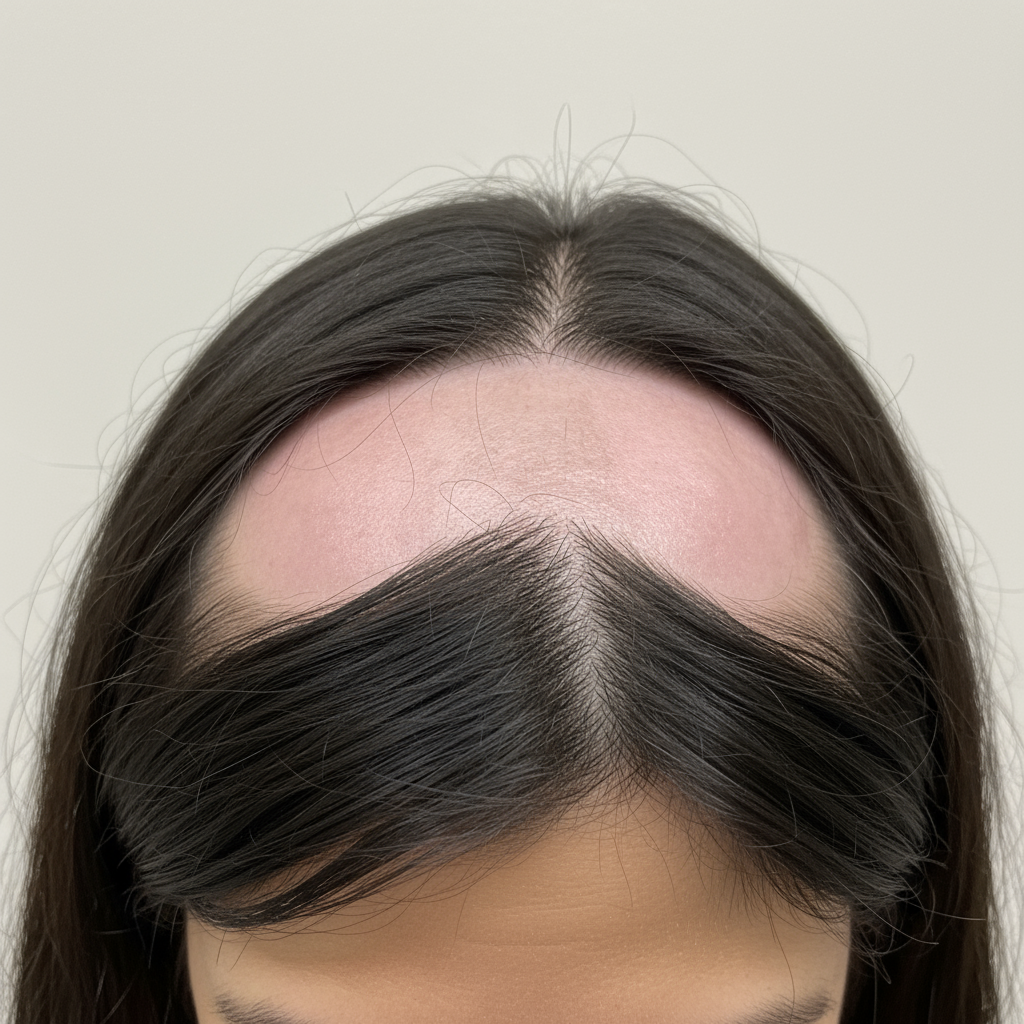
So, there is the other aspect of that, which is an environmental trigger. Now, again, after the 20 years of being in a clinical setting and helping people recover their hair, I have seen virtually everything. So, I’ve seen people who have had a full body, or basically a alip Arata that then turned into totalis and then universalis, from chemical exposure.
So, an individual that I recall back in the day, he was a carpenter, and ended up knowingly being exposed on an ongoing basis to the fumes from the lacquer that they put down onto pieces of wood afterwards. And he knew that he was allergic to that, but that was his job, so he ended up doing it ongoing, and he actually lost all of his hair because of it throughout his entire body.
And I told him, when you get into this totalis and universalis, there’s not a whole lot that you can do unless you remove the actual trigger. So, he would have to physically remove himself from that environmental uh exposure, and then actually go through some type of detoxification process.
Uh, for myself personally, I actually have a uh diffuse form of alip Arata, and that for me happens to be related to allergies. And so, any type of underlying allergy or inflammation or stress, then I will go through a diffuse shed from alip sharata. My mother, again, we talk about a genetic history, also has alpata. So, these are one of the things of why I do what I do.
It may also come into medications. Uh, may also come into uh other types of things, like surgery. So, whatever the physical stressor is — it’s not an emotional tie, but it’s a physical stressor — that leads to this reoccurrence of alip sharata.
So, when you’re looking at the two different forms, both of which really need to be nipped in the bud based on whatever the trigger is — so again, if it’s environmental, you want to eliminate whatever the environmental issue is. Whether that be an allergy, so you want to remove the allergens. If it’s a chemical toxicity, you want to remove the chemical toxicity. If it’s an emotional cause, then obviously that is substantially more challenging, because emotional can happen through a variety of different things that are going to lead to ongoing scenarios of that emotional trauma. So, that is one that’s just a little bit more difficult to deal with.
But to give you an overall view of what the next level treatments can be, you really can take a couple different steps to mitigate those. I’m going to talk about a natural uh solution as well as a pharmaceutical solution.
So, overall, one of the basic things that you can do for either the emotional or the physical trauma is that you want to get your blood levels to a proper level for vitamin D3 and fadin. So, there’s actually a tremendous amount of research that says, if your fadin is less than 30, you have a substantially greater probability of having some type of inflammatory hair loss, inclusive of alpata — meaning that, if you get your ferad in above 70, which is the optimal area, you may mitigate your alip shata just by doing that.
I also feel that vitamin D3 it applies in that scenario. So, you want to get your vitamin D3 up to at least 50 or 60 nanograms per milliliter. And basically, keeping those nutritional items in that zone — so vitamin D3 between 60 and 80 ng per milliliter, and fadin essentially above 70 ng per milliliter — is something that is definitely going to be very powerful in at least mitigating a fair amount of alip sherat, or controlling it to a degree.
Now, a natural treatment would be doing something nutritionally to kind of stabilize some of the stress factors. You can actually do that with a nutritional supplement called the F growth vitamin. So, we use this for a lot of different Nutri ntional loss, but also stress induced loss. The F growth vitamin — you can just take two in the morning, one at night, with food.
And a topical application that includes melatonin. Now, I have watched melatonin work topically for probably 10 years for all sorts of stress-induced hair loss. We really didn’t start using it for alip sharata until probably about 3 to four years ago. And as long as you’re mitigating the underlying reasons for loss — again, whether it be the emotional aspect or the environmental aspect — then it should definitely help control uh and slowly reduce the amount of alip arot spots that you’re dealing with.
So, those are items that I’ve seen work and are very powerful uh. So, you certainly can get the neutr topical melatonin scalp serum for inflammatory hair loss, as well as the F growth vitamin.
Now, there is a pharmaceutical treatment that you can utilize. I know a lot of the dermatologists in the industry who really target these type of alipas — specifically aliper — and there are two Pharmaceuticals that work the best.
Alopecia Areata New Treatment 2025
One is a topical cazol 0.5%. This scalp serum can be applied directly to the area — and that area of the spot, or the affected area, will hopefully be suppressed, because the cazol is a topical corti steroid, so it helps suppress the immune response.
The problem with alipus geriot is, it’s your own immune system essentially disrupting the flow of the growth cycle. So, by suppressing the immune response, you’ll successfully suppress the action of the Arata.
Now, some areas are going to be obviously far more aggressive than others. So, when you’re applying the topical cazol, you may need to follow a general recommendation of twice daily for the first four to 6 weeks — which is the normal recommendation from a dermatologist. But I have seen people in dermat olist recommend it ongoing — so you’re literally applying it once or twice a day ongoing, per your Physician’s prescription.
So, that’s something that obviously you would speak to your dermatologist about, and make sure that you’re doing it in compliance with your prescription. But that is something that can be ongoingly used to help suppress the immune response.
Now, something that would be a little bit more acute would be something like a calog injection. Calog is an injectable corst steroid. So, you would actually inject this specifically into the spots of the Arata — so into the circles, and along the perimeter. In some cases, some people do you know full scalp injections, which can be extremely painful, and unfortunately, in some cases, it can lead to some additional trauma on the scalp, some additional hair loss. I would say that that’s probably rare, but I have seen it happen.
But collectively, those injections can be done usually 8 weeks apart, sometimes 12 weeks apart, and often times will actually arrest the full sort of bout of the arot, and help calm the entire situation down. So, that may be a first line of defense — when the little spots have appeared, go to your dermatologist, get the Kenalog injections, and then you may actually follow up with some cazol.
So, that would definitely be from a pharmaceutical perspective uh path as well. Unfortunately, Kenalog — I mean, you can only do a couple rounds sounds before you really need to take a break, because these are you know again an immunosuppressant. So, you really don’t want to get too involved on an ongoing basis. But it is something that is absolutely a viable option.
In my opinion, the best case scenario too is to do all of those things — if you can get away with not using the catalog and just use the topical cazol, as well as get your vitamin D3 and ferin up, as well as potentially use the F growth vitam and the neutr — put this thing down as quickly as possible. Because you don’t want it to become this chronic ongoing situation and continue to expand and progress into something that’s far more aggressive, like totalis and universalis.

Now, again, removing the triggers — whether it be allergies, so get an allergy test; you know, environmental toxins, some type of toxic load that you might be experiencing — you know, again, try to remove these things.
But from an emotional perspective, there’s only one thing that I’ve really seen work. I mean, I guess theoretically, I’ve seen therapy uh work that has gone on for years and years and years, but that may take an extraordinary amount of time to actually work and become a viable option to repress or suppress the alip sheriat.
I have seen something work, which I personally used, as well as I recommend to my clients, for emotional trauma — and that is called the emotional Freedom technique, or EFT.
Now, this is sort of a neurological rewiring of emotional trauma. So, literally, this feeling of fight ORF flight that you get — which does have in fact a chemical and biological response throughout your body — will be changed and manipulated through this natural process of sort of rewiring the neurological pathways, through again EFT.
Now, you need to find an EFT practitioner, and that individual is going to obviously know what to do when it comes to this. But this is a whole routine of tapping throughout these sort of acupuncture points, and rewiring how you think about things.
I like to see credibility. I like to see something work before I recommend it. So, when I first heard about efts, I was a little skeptical. But personally, I have experienced it, and it does reduce the emotional trauma. I recommended it to many many people, and they also have seen it remove or reduce the emotional trauma.
So, if you can seek out an EFT practitioner, you can Google it and really find somebody who’s going to specialize in the emotional Freedom technique. Something similar would be like EMDR, for again reducing emotional trauma — but that is something that is a viable option as well.
I know there was a lot of content in this uh. I really hope you know, if you need to go back and rewatch it, feel free to do that. But this is the full picture. I’ve been doing this for a very long time, and there really isn’t a lot of positive Progressive things for Arata that aren’t aren’t going to potentially come along with some pretty substantial side effects.
Biologics and Jack Inhibitors are sort of this new level of anti-inflammatory treatments, but these are things that can potentially really debilitate your immune system, and really aren’t an option unless you’ve got some very aggressive, perhaps universalis.
So, I hope that that helps. Please, if you like this video, go ahead and hit the like button. If you uh really want to see more content like this, go ahead and subscribe to this channel. I’ve got ongoing just new information coming out about all the latest and greatest things that are happening in hair loss.