
Hi, everyone. Welcome to our latest medical education video by Dr. Wellness. My name is Dr. Chen Yiming, and today, yes! Today is a special day. Why? Because we will be talking about the dreaded pigmentary skin condition called melasma.
Many, many ladies are suffering from this disfiguring pigmentary disorder. And I know many of you sitting in front of the TV, computer, or hand phone going, “Yes, please tell me how I can treat melasma.” So yes, I will share with you today how we can manage the condition. Watch through to the end.
Before we begin, please click on the subscribe and notification button to receive updates whenever we produce a new video. We will be producing more videos in the upcoming weeks on skin and beauty. Stay tuned.
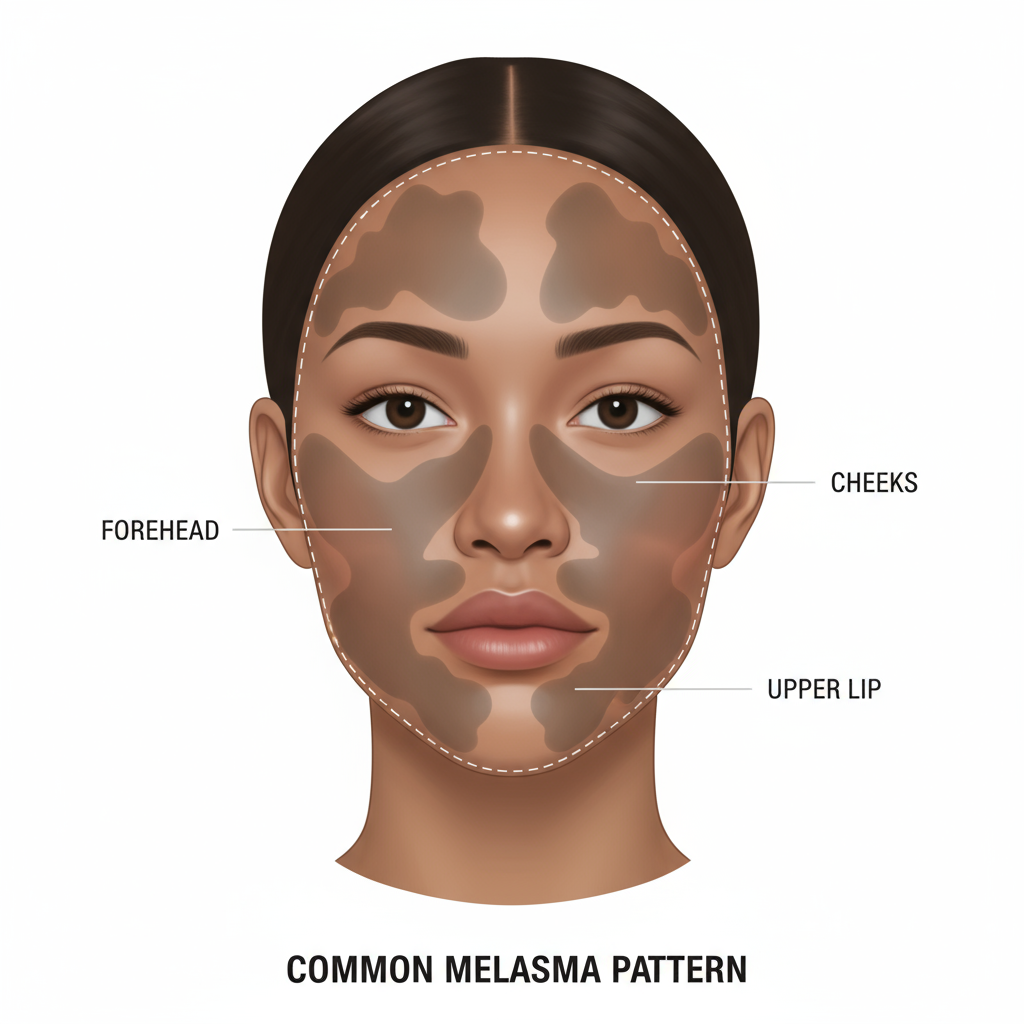
Melasma is a common pigmentary problem affecting Asian skin. It usually appears as brownish patches over the forehead, the temple, the nasal bridge, upper lips, and even jawline.
Melasma is caused by an interplay between genetics, hormonal, and UV factors, and gender. Women, unfortunately, is affected more than men. Worsening or appearance of melasma is often reported after pregnancy, hormonal pills, oral contraceptive pills, and sun exposure.
I would classify treatment options available generally into three broad categories. One, topical applications. Two, procedures, such as lasers, IPL, chemical peels. Three, oral medications.
Melasma Explained: Causes, Treatments, and How to Manage Pigmentation
Let us first touch on the topical options. Sunblock is a definite must. A lot of my patients complain that, you know, oh, I apply plenty of sunblock, but my pigmentation and my melasma is still there. Yes. Well, my answer to that is, you still have to apply your sunblock regularly. It doesn’t really treat or cure your melasma, but it does an excellent job in helping you prevent it from worsening. So please put it on.
Secondly, you can use medicated topical creams or gels. Traditionally, there is the triple combination medication which consists of hydroquinone, steroids, and tretinoin. This creams can help lighten melasma, and maintain melasma in his lightened state. There are, however, side effects to this creams. So your doctors should inform you when you’re actually started on it.
The other cream which is relatively new and available in the market is known as Cysteamine, and goes by the trade name Cyspera. It has also been shown to help with lightening and maintenance of the lightened state of melasma. I like it because it has relatively few side effects, and it is effective.
Now we will touch upon the procedures that can be done to help with lightening of melasma. The top favorite would be lasers, you know. There are so many lasers available in the market that you can see online, on Facebook, on marketing contents. Nd: YAG lasers, Pico lasers, Yellow lasers, fractional lasers, you name it. You know, there’s plenty of choices available.
However, there is a fine balance in using lasers to treat melasma, as lasers can sometimes cause worsening of pigmentations if it’s not used appropriately. Please have a detailed consultation with your doctor to find out in detail about the laser treatment offered.
The second treatment that we talk about would be IPL or Intense Pulse Light. Intense Pulse Light has been around for a long time. It does a great job in lightening the face and help with reducing superficial pigmentation, such as epidermal melasma. Again, it’s a great tool in the arsenal of treatment options, but care is also needed in using it, as I have seen burns associated with IPL, if the settings were inappropriate.
The third procedure that we use sometimes includes chemical peels. Chemical peels work by removing the superficial pigmentations on the face by chemically exfoliating them away. I am moving away from chemical peels because I find them comparatively unpredictable in the outcome, with a slightly higher chance of complications. However, from time to time, I still use it for my patients whom I found suitable.
Now I’m gonna touch on oral medications. There are not many oral medications that are proven to work, one of which is tranexemic acid. Tranexemic acid is a medication that has been used traditionally to reduce heavy menses or excessive bleeding during menses. It is an off-label use for the treatment of melasma. So please take note on that.
This oral medication has been shown to lighten melasma significantly. It is an option for the treatment of melasma. However, again, it has its side effects, so please consult your doctor for more details.
Some of the other oral supplements that has been given to help with lightening of melasma and pigmentations include commercial products like Purewhite Radiance from Heliocare, or Crystal Tomato.
In all my melasma patients, I have made it a point to inform them, melasma is a pigment issue that does not have a hundred percent cure or solution. We have to treat them for prolonged period of time, and you have to maintain the treatment to ensure that the pigmentations do not resurface, because very often they tend to come back.
Melasma Guide: Everything About Causes, Triggers, and Treatment Choices
The most effective treatment plan is one that usually combines all modalities; topical creams, with oral medication, with treatments. Following which, they will often ask me, you know, then what’s, what’s the point of treatment? You know, I want cure, I don’t want just lightening. But, there’s always a point.
Melasma affects the appearance, and hence the confidence and the self-esteem of a lady. We can do a lot of good if we can reduce the pigment by about 50 to 60% and maintain it at the lightened state. Patients can still be very happy and grateful thereafter, even if the pigments are not completely removed. So, don’t give up.
Thank you for watching till the end. I have included below in the comment box, the website, Facebook, and hotline for ClearSK Aesthetics, if you need any help for your pigmentations. I’ve also included the website and Facebook to Vitacare Family Clinic, our family clinic chain in the Northeast.